Thyroid Genetics Test

Discovering Genetic Changes in your Thyroid
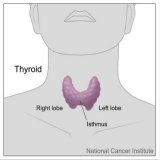
There are around 600,000 people in the United States annually that undergo a fine needle aspiration (FNA) biopsy to examine thyroid nodules. During these biopsies, cells are extracted and tested to determine cellular condition (whether they are benign or cancerous) using microscopy/cytology-based methods.
Although accurate, 20%-25% of FNA biopsies are returned with an indeterminate result. Most patients undergo diagnostic surgery, with approximately 60% being overtreated or undertreated. Because of this, microscopical observations of cells from nodules and surgical removal are not the most optimal treatment options for patients.
Today, management of thyroid nodules has expanded to molecular genetic testing, using next generation sequencing (NGS) technology. Highly-sensitive NGS technology determines genetic changes in thyroid nodules, resulting in informative risk assessment and avoidance of unnecessary surgeries.
Our Thyroid Genetics Test examines genetic changes that are relevant for hypothyroidism, thyroid hormone resistance, and thyroid risk panel. This NGS panel consists of 45 genes. These are listed in the table along with the disease-related conditions.
Genes List
- ATP1A2 NRAS
- CACNA1A PAX8
- CST1 PIK3CA
- CST3 PLCG2
- CSTB PLN
- CTNNB1 PRKCG
- DUOX1 SECISBP2
- DUOX2 SLC16A2
- ESR1 SLC26A4
- FOXE1 SLC40A1
- G6PD SLC5A5
- GLIS3 TBL1X
- GNAQ TFR2
- HAMP TG
- HFE TGFBI
- HRAS THRA
- IGSF1 THRB
- IRAK1 TP53
- IRS4 TPO
- IYD TRH
- KRAS TSHB
- MECP2 TSHR
- NKX2-1
Important Questions
Frequently Asked Questions
Have a question? You might find the answer below in our FAQs!
Who can use Simplicity Diagnostics?
Simplicity Diagnostics works with physicians, medical practices, clinics, hospitals, and other healthcare organizations.
How do I become a provider?
Getting started is simple. Complete our Become a Provider form, and our team will contact you to help with enrollment and next steps.
What types of testing do you offer?
We offer a range of diagnostic and specialty testing, including genetic and genomic testing, pharmacogenomics (PGx), oncology-related testing, metabolic testing, immunology, toxicology, and other specialty laboratory services.
How quickly will we receive results?
Many tests have a typical turnaround time of 24–48 hours, although turnaround times vary depending on the specific test and specimen requirements.
How do I order a test?
Once your practice is set up as a provider, our team will provide the information and resources needed to order testing and submit specimens.
How are test results delivered?
Test results are delivered securely through our provider workflow. Our team can help your practice understand the process and access results.
Can your team help our office choose the right test?
Yes. If your practice has questions about test selection, specimen requirements, ordering, or other laboratory-related needs, our provider support team is available to assist.
What specimen types do you accept?
Specimen requirements vary by test. Please refer to the specific test information or contact our provider support team before collecting or shipping a specimen.
Do you work with insurance?
Insurance coverage and patient responsibility can vary by test, patient, and plan. Our team can provide information about the billing process and available options.
Can I speak with someone about setting up my practice?
Absolutely. Contact our team and we can walk your practice through the process of becoming a Simplicity Diagnostics provider.
Why should my practice choose Simplicity Diagnostics?
We focus on making laboratory testing simple for healthcare providers through reliable testing, fast turnaround times, a broad test menu, and responsive provider support.
How do I get started?
The first step is simple: Become a Simplicity Diagnostics provider.